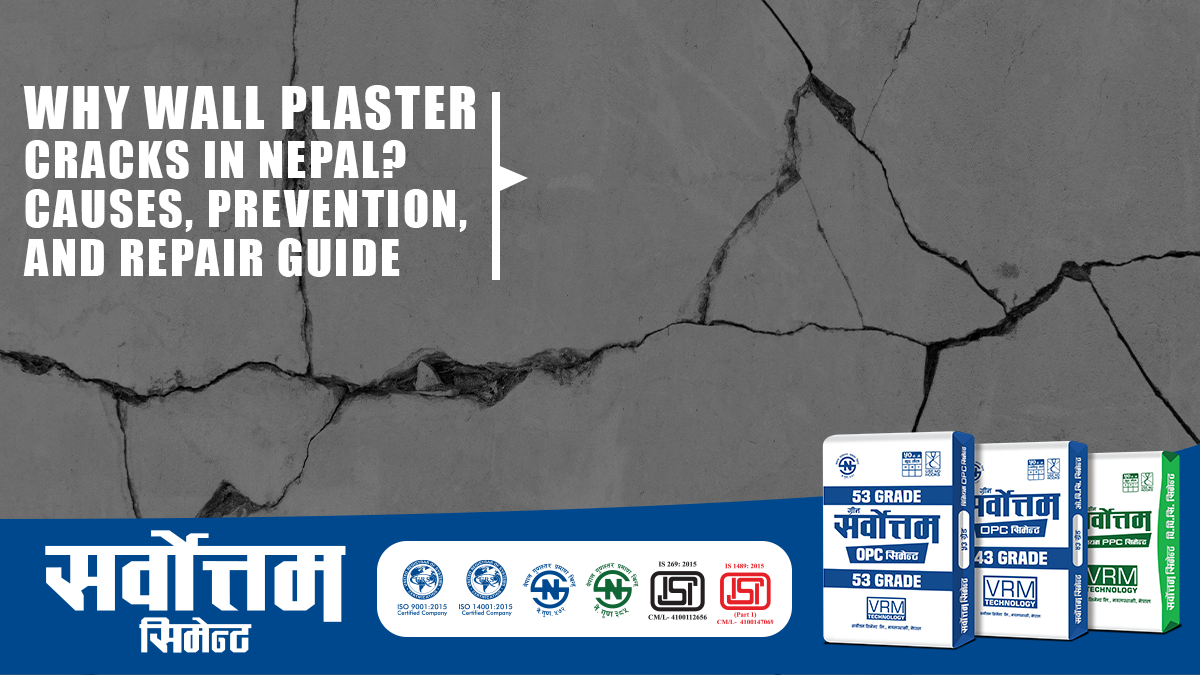
Why Wall Plaster Cracks in Nepal? : Causes, Prevention, and Repair Guide
Introduction
Wall plaster cracks are a common construction problem in Nepal, affecting both residential and commercial buildings. While small hairline cracks may appear over time, visible cracks, plaster peeling, or plaster falling off the wall usually indicate deeper issues such as incorrect cement–sand ratios, poor surface preparation, low-quality cement, or improper curing.
In Nepal’s climate, marked by hot summers, dry winds, and rapid moisture loss choosing the right cement for plastering in Nepal is critical. Builders and homeowners increasingly rely on trusted brands like Sarbottam Cement, often regarded as one of the best cements in Nepal, to achieve crack-free, durable plaster finishes.
When searching for the best cement in Nepal, many homeowners and contractors compare top cement brands in Nepal to identify the best cement for plastering in Nepal that offers strong bonding, crack resistance, and long-term durability. This guide helps you understand not only why plaster cracks occur, but also how selecting the right cement in Nepal plays a key role in preventing plaster failure.
Common Causes of Wall Plaster Cracks
A. Incorrect Cement–Sand Mix Ratio
Using too much cement causes excessive shrinkage, leading to cracks.
Using too little cement results in weak bonding and poor durability.
Recommended plaster ratios in Nepal:
- Internal walls: 1:6 (cement: sand)
- External walls: 1:4 (cement: sand)
B. Dry or Dusty Wall Surface
Plaster does not bond properly when applied to dry, dusty, or loose brick/block surfaces. This is a major reason plaster peels or detaches from walls in Nepalese houses.
C. Rapid Drying Due to Weather Conditions
Hot temperatures, strong winds, and direct sunlight cause plaster to dry too quickly. This leads to plastic shrinkage cracks, especially common during summer construction in Nepal.
D. No or Inadequate Curing
Curing allows cement to hydrate and gain strength. Skipping curing or curing for too few days is one of the leading causes of plaster cracking and early failure.
E. Low-Quality or Old Cement
Expired or low-grade cement reduces bonding strength and increases cracking risk. For plastering, high-quality PPC cement performs better than poor-grade alternatives, offering smoother finishes and better durability.
How to Prevent Wall Plaster Cracks in Nepal
Follow these best plastering practices to achieve long-lasting, crack-resistant walls using the best cement in Nepal for plastering:
- Use proper cement–sand ratios (1:6 internal, 1:4 external)
- Thoroughly dampen the wall surface before plastering
- Use top cement in Nepal for residential construction, such as high-quality PPC cement from a reliable manufacturer like Sarbottam Cement
- Start curing within 24 hours after plastering
- Continue curing for at least 7 days
Install fiber mesh at stress-prone areas:
o Door and window corners
o Beam–column junctions
o Electrical conduit cut-outs
Using the best strength cement in Nepal for long-lasting plaster, combined with proper workmanship, significantly reduces cracking problems and improves overall wall durability.
How to Repair Cracked Plaster
- Hairline cracks:
Can be repaired using cement-based crack fillers or wall putty.
- Wide or deep cracks:
Require removal of loose plaster, proper surface preparation, re-plastering with the correct mix, and full curing.
Ignoring deep cracks can lead to water seepage, paint failure, and long-term wall damage.
Which Cement Is Best for Plastering in Nepal?
When choosing the best cement in Nepal for plastering, consider workability, bonding strength, crack resistance, and curing performance.
PPC cement is ideal for plastering because it:
- Provides better workability
- Produces smoother plaster finishes
- Reduces shrinkage cracks
- Performs well in Nepal’s varied climate conditions
Well-established brands like Sarbottam Cement manufacture high-quality PPC cement widely used for internal and external plastering across Nepal.
Conclusion
Wall plaster cracks are largely preventable. In most cases, they occur due to avoidable mistakes such as incorrect mix ratios, poor surface preparation, inadequate curing, or the use of low-quality cement.
By following proper plastering practices and selecting the best cement in Nepal for plastering, homeowners and builders can achieve strong bonding, smooth finishes, and durable walls. Choosing a top cement brand in Nepal that offers consistent quality and strength such as Sarbottam Cement ensures long-lasting plaster performance suitable for Nepal’s construction environment.
Frequently Asked Questions (FAQs)
Q1. Is it normal for wall plaster to crack?
Minor hairline cracks can occur, but wider cracks usually indicate material or workmanship issues.
Q2. What is the ideal curing time for plaster?
Plaster should be cured for at least 7 days, starting within 24 hours after application.
Q3. What cement–sand ratio is best for plastering in Nepal?
Use 1:6 for internal walls and 1:4 for external walls.
Q4. Can cracked plaster be repaired without redoing the wall?
Small cracks can be filled, but deep cracks usually require re-plastering.
Q5. Why does plaster peel or fall off the wall?
Poor surface preparation, lack of curing, or low-quality cement causes plaster detachment.
Q6. Does curing really prevent plaster cracks?
Yes. Proper curing allows cement to gain strength and reduces shrinkage cracks.
Q7. Where should fibre mesh be used in plastering?
At corners, joints, beam–column junctions, and other high-stress areas.
Q8. Which is the best cement in Nepal for plastering?
PPC cement is preferred for plastering due to better workability and crack resistance. Trusted brands like Sarbottam Cement are widely used in Nepal.
Q9. Can weather conditions cause plaster cracks?
Yes. Hot, windy, or dry conditions cause rapid moisture loss and cracking.
Q10. When is it safe to paint after plastering?
Painting should be done after 21–28 days, once plaster is fully cured.
Q11. Which cement brand is best in Nepal for wall plastering?
Well-established PPC cement manufacturers such as Sarbottam Cement are considered among the best cement brands in Nepal for wall plastering due to their strength, workability, and crack resistance.
Q12. Is PPC cement better than OPC for plastering in Nepal?
Yes. PPC cement is generally better than OPC for plastering in Nepal because it offers improved workability, lower shrinkage, smoother finishes, and better performance in Nepal’s climate.


