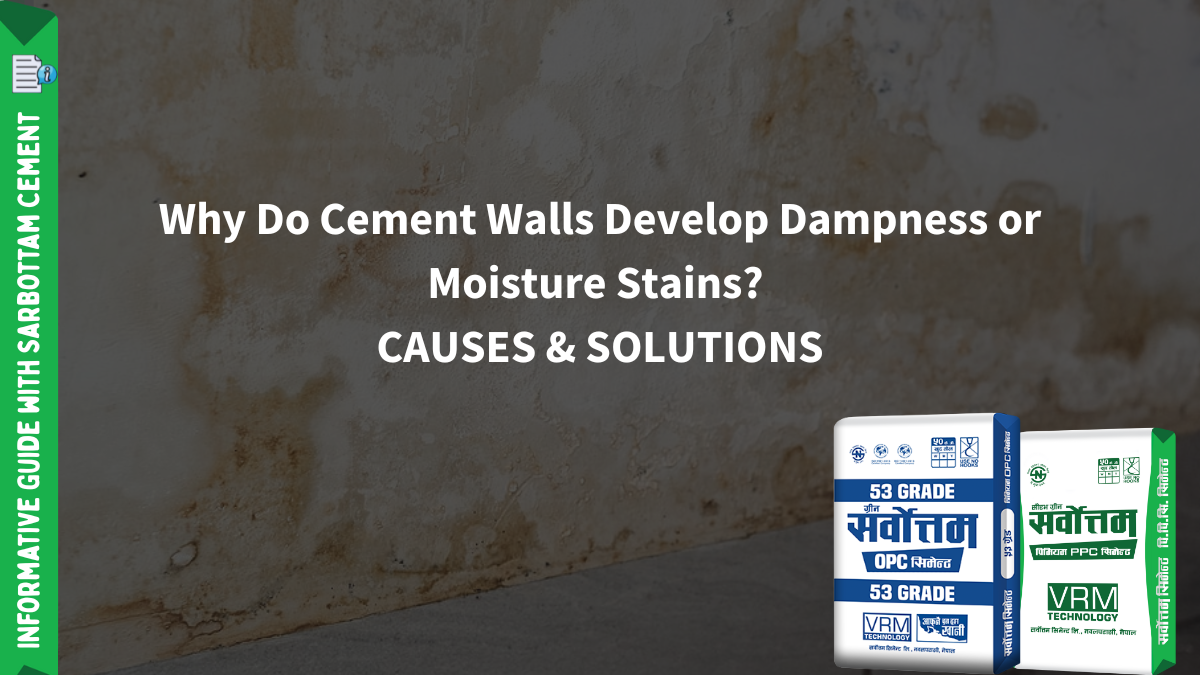
Why Do Cement Walls Develop Dampness or Moisture Stains? Causes & Solutions
Introduction
Dampness and moisture stains on cement walls are among the most common and frustrating problems faced by homeowners and builders in Nepal. These stains not only affect the appearance of walls but can also lead to structural damage, paint failure, mold growth, and health issues if ignored.
Understanding why cement walls develop dampness is the first step toward preventing long-term damage. Let’s explore the root causes and proven solutions.
What Is Dampness in Cement Walls?
Dampness occurs when unwanted moisture penetrates or accumulates within walls due to poor construction practices, material issues, or environmental conditions. It often appears as:
- Dark patches
- Peeling paint
- White salt deposits
- Mold or fungal growth
- Wet patches even during dry seasons
Main Causes of Dampness and Moisture Stains
1. Poor Waterproofing
One of the biggest reasons for damp walls is lack of waterproofing in:
- External walls
- Roof slabs
- Bathrooms and kitchens
Without waterproof layers, rainwater and humidity easily seep into cement walls.
2. Improper Curing of Cement
Curing allows cement to gain strength and reduce porosity.
Insufficient curing results in:
- Micro-cracks
- Increased water absorption
- Weak bonding
This allows moisture to travel through the wall.
3. Use of Poor-Quality Cement or Materials
Low-quality cement:
- Contains higher impurities
- Has inconsistent fineness
- Absorbs moisture easily
Using high-quality cement like Sarbottam Cement, produced with VRM technology, significantly reduces porosity and moisture penetration.
4. Incorrect Plaster Mix Ratio
Too much sand or water in plaster creates a porous surface, allowing water to enter easily.
Recommended ratios:
- Internal walls: 1:6 (cement:sand)
- External walls: 1:4 (cement:sand)
5. Rising Damp from Foundation
Moisture from the ground rises upward due to capillary action, especially if:
- Damp-proof course (DPC) is missing
- Foundation waterproofing is inadequate
This is common in older buildings.
6. Cracks in Walls or Joints
Even hairline cracks act as pathways for moisture, especially during monsoon seasons.
7. Poor Drainage and External Exposure
- Improper slope on terraces
- Blocked rainwater pipes
- Constant wall exposure to rain
These factors keep walls wet for prolonged periods.
How to Fix Dampness in Cement Walls
Short-Term Solutions
- Identify and repair visible cracks
- Repaint only after walls are fully dry
- Improve drainage and water outlets
Long-Term & Permanent Solutions
- Use Waterproofing Compounds
Apply waterproof coatings or admixtures during plastering. - Ensure Proper Curing
Cure plaster and concrete for at least 7–10 days. - Use Quality Cement
Choose Sarbottam Cement OPC or PPC, which offers:- Lower permeability
- Better bonding
- Higher durability
- Apply Damp-Proof Course (DPC)
Essential at foundation level to stop rising damp. - Use Washed Sand & Clean Water
Reduces salt content and moisture retention.
How to Prevent Dampness During Construction
- Always use fresh, high-quality cement
- Follow correct mix proportions
- Cure properly and consistently
- Apply waterproofing in wet areas
- Ensure good slope and drainage design
- Seal joints, corners, and openings carefully
Conclusion
Dampness in cement walls is not just a surface issue it’s a sign of deeper construction or material problems. By using quality cement, following proper curing practices, and applying correct waterproofing methods, dampness can be prevented and eliminated.
For long-lasting, moisture-resistant construction, choose Sarbottam Cement engineered for strength, durability, and protection.
Frequently Asked Questions (FAQs)
Q1: Is dampness dangerous for buildings?
Yes. Over time, dampness weakens walls, damages plaster, and can reduce structural life.
Q2: Can dampness be fixed permanently?
Yes, if the root cause is identified and corrected using waterproofing and quality materials.
Q3: Does cement quality affect dampness?
Absolutely. High-quality cement with lower porosity like Sarbottam Cement significantly reduces moisture penetration.
Q4: Is repainting enough to fix damp walls?
No. Paint only hides the problem temporarily. The moisture source must be treated first.


