From Raw Material to Reliable Strength: How Sarbottam Cement Is Made
Introduction
Behind every strong structure lies a carefully controlled cement manufacturing process. From sourcing raw materials to final packaging, Sarbottam Cement follows a precision-driven approach to deliver high-strength, durable, and eco-friendly cement suitable for Nepal’s diverse construction needs.
Whether it’s a home, hospital, highway, or high-rise building, every bag of Sarbottam Cement is engineered for consistency and long-term performance.
Why Cement Manufacturing Quality Matters
Cement quality is not determined only by raw materials it depends on how precisely each stage of manufacturing is controlled. Variations in grinding, blending, or burning temperatures can directly affect strength, setting time, and durability.
This is why Sarbottam Cement maintains strict quality control from mine to market.
Explore More: Check the quality of Cement
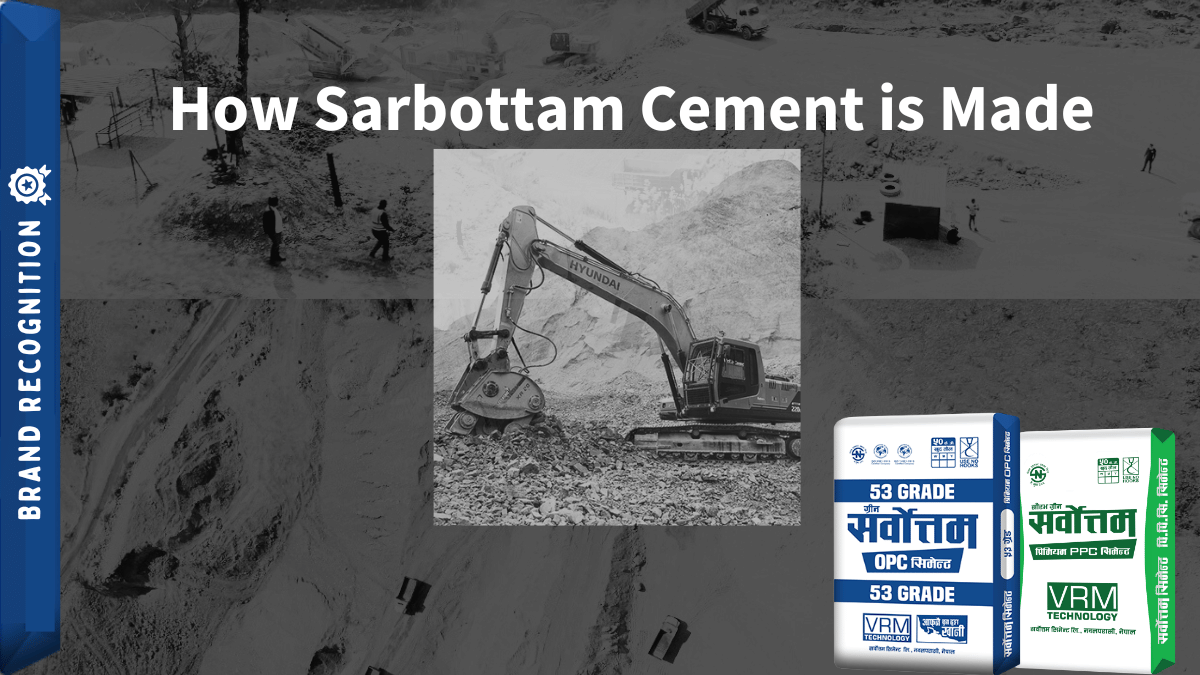
Sourcing Raw Materials from Our Own Limestone Mines
Unlike many manufacturers, Sarbottam Cement owns and operates its own limestone mines in Nawalparasi. This provides:
- Consistent purity and chemical composition
- Reliable supply for large-scale projects
- Full control over raw material quality
- Responsible and sustainable mining practices
In addition to limestone, materials such as clay, gypsum, fly ash, and bauxite are carefully selected and tested to ensure optimal performance in the final cement.
State-of-the-Art VRM Technology for Precision Grinding
Sarbottam Cement uses Vertical Roller Mill (VRM) technology, the first of its kind introduced in Nepal.
Benefits of VRM Technology
- Uniform particle size distribution
- Higher and more consistent compressive strength
- Smoother workability on site
- Lower energy consumption
- Reduced heat of hydration, minimizing cracks in large pours
This advanced grinding technology ensures that every batch of cement performs consistently across different applications.
Clinker Production and Controlled Blending
Raw materials are blended in precise proportions and heated in a rotary kiln at 1400–1450°C to form clinker the core component of cement.
- OPC 43 & OPC 53: Designed for high early and long-term strength in load-bearing and RCC structures
- PPC: Blended with high-reactivity fly ash to improve durability, workability, and chemical resistance
This controlled blending process ensures predictable performance on site.
Final Grinding, Packaging, and Nationwide Distribution
After clinker grinding and blending, the cement is:
- Tested for strength, fineness, and setting time
- Factory-sealed to prevent moisture contamination
- Certified under NS 572 (OPC) and NS 385 (PPC)
- Compliant with ISO 9001 and ISO 14001 standards
Finished cement is then dispatched through 1,500+ dealers across Nepal, ensuring timely availability nationwide.
Real Benefits on Construction Projects
Using Sarbottam Cement ensures:
- Uniform strength in foundations, walls, and RCC elements
- Faster construction timelines without compromising quality
- Reduced cracking and maintenance costs
- Sustainable construction through energy-efficient manufacturing
These benefits translate into long-lasting, reliable structures across Nepal.
Conclusion
From raw material extraction to final delivery, Sarbottam Cement controls every step of the manufacturing process to guarantee strength, reliability, and sustainability in every bag.
Whether you’re constructing a small home or a national infrastructure project, Sarbottam Cement is engineered to last providing confidence, consistency, and peace of mind for generations.
Built with precision. Trusted across Nepal. Engineered for excellence.
Frequently Asked Questions (FAQs)
1. Why does cement manufacturing quality matter?
Because strength, durability, and setting behavior depend on precise control at every production stage.
2. Does Sarbottam Cement use its own limestone?
Yes. Sarbottam Cement sources limestone from its own captive mines, ensuring consistent raw material quality.
3. What is VRM technology and why is it important?
VRM (Vertical Roller Mill) technology ensures uniform grinding, higher strength, smoother workability, and energy-efficient production.
4. How is clinker produced in cement manufacturing?
Raw materials are heated in a rotary kiln at 1400–1450°C to form clinker, the key component of cement.
5. What is the difference in manufacturing OPC and PPC?
OPC focuses on early strength, while PPC is blended with fly ash for long-term durability and lower heat of hydration.
6. Is Sarbottam Cement tested and certified?
Yes. All products are factory-tested and certified under Nepal Standards (NS) and ISO quality systems.
7. How does Sarbottam ensure consistent quality across Nepal?
Through controlled manufacturing, factory-sealed packaging, and a nationwide dealer network of 1,500+ outlets.


